A Late-Autumn Garden Walk for What Has Changed
A late-autumn garden walk reveals seedheads, leaf patterns, and lasting structure, helping you see what has changed before deciding what needs attention.
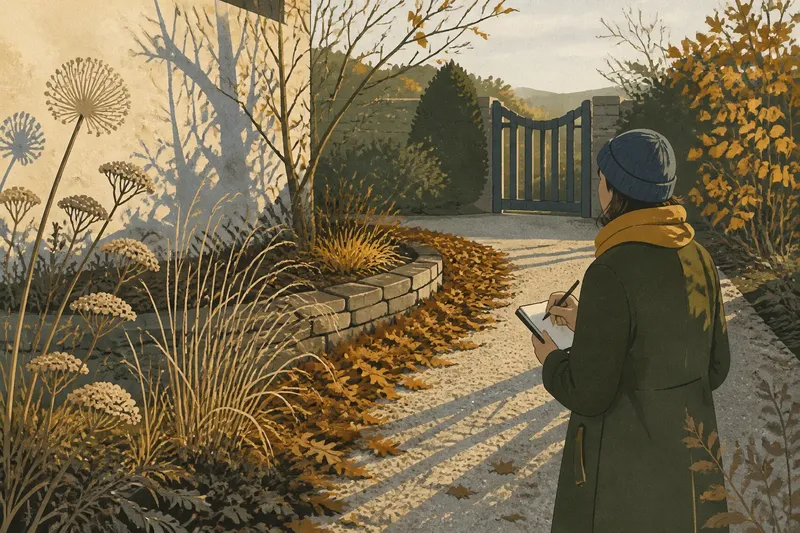
The common mistake on a late-autumn garden walk is to turn every fallen leaf or leaning stem into a job. The cost is overlooking the differences that make the garden newly visible: what has faded, what persists, and what has come into view. Leave the rake and pruners in the shed, and take a route you can walk at an unhurried pace.
A pocket notebook or phone camera can help you remember a view, but you do not need to document the whole garden. Focus on a few concrete contrasts, then decide later whether any of them call for action.
What should I look for on a late-autumn garden walk?
Look for contrasts between what has faded, what persists, and what has become newly visible. A dry, exposed bed may hold brittle stems while a shaded corner stays damp and leafy. Describe the conditions at each spot rather than assuming the whole garden is experiencing autumn in the same way.
Seedheads offer clear outlines to compare. A dried allium globe, a flat yarrow head, and the fine branching of ornamental grass each make a different shape. See whether each stands out against a wall or disappears against nearby shrubs. Then notice what remains: trunks, evergreen foliage, plant supports, paths, and low walls may anchor a view that summer growth once obscured.
Fallen leaves add another contrast. A band gathered along a fence or shrub differs from an open patch with almost none. Note the pattern and the surfaces it reveals; do not assume that every accumulation needs to be cleared.
How can I notice seedheads without deciding to cut them?
Describe the plant’s shape and position before judging whether it needs attention. Is the stem upright or leaning? Does the head remain visible from the path or a window? Is seed still held in the head, or has it fallen beneath the plant?
Movement matters, too. Some stems sway separately; others form a mass that shifts together. A stem crossing a regularly used path may present an immediate access issue, while one that simply looks untidy from a particular angle can wait. If pruning becomes a consideration, identify the plant and check its care guidance rather than applying one cleanup rule to every bed.
Where do fallen leaves show how the garden moves?
Follow a visible trail of leaves from an open patch toward a hedge, wall, gate, or planting bed. A cluster along one border and a clear space beside it can show how air moves through that particular corner. Notice what the leaves cover and what they leave exposed, but treat the pattern as an observation, not an automatic instruction to rake or redesign.
Say you see oak leaves gathered in a crescent behind a low stone border, while the open bed beside it is nearly clear. Note both locations, then compare them after another windy spell. The leaves may shift or collect in the same pocket; either result gives you a clearer picture of where they settle without deciding in advance whether they should stay.
Why does late-autumn light change familiar garden views?
Low seasonal light can sharpen a wall’s outline, stretch a stem’s shadow across gravel, or make a pale path stand out beside a dark bed. Walk a familiar stretch in both directions and notice which features catch the light and which recede. If a view seems especially different, note your position and whether the sky is cloudy or clear.
These details help explain why the same bed can look different from the path and from a window. They are useful context for later decisions, but a striking shadow or bright surface is not by itself a reason to change the garden.
How should I record a garden walk?
Use a few plain details rather than a running account. A note or photo is useful when it helps you recognize a view later; skip it if it turns the walk into a documentation chore.
- Check where you are standing; if the location is easy to identify, write it down, and if not, add a landmark such as the shed or gate.
- Check which feature stands out; if it is clear, name it, and if several compete, record the one that changed most.
- Check what looks different from an earlier view; if you can identify a change, describe it, and if you cannot, record only what is visible now.
- Check the viewing conditions; if wind, cloud, or direct sun affects the scene, note it, and if conditions seem ordinary, leave them out.
- Check whether a photo has a fixed reference point; if it includes a path edge or wall corner, keep it for comparison, and if not, retake it from a position you can find again.
- Check whether an observation raises a practical concern; if it affects access or plant care, look into it separately, and if not, leave it as a note.
Keep each entry tied to one place and one visible change. That makes it easier to compare views without turning every observation into a task.
When should I repeat the walk?
Repeat the route when a change in weather or light gives you something new to see. A walk after wind may reveal shifted leaves; one under a clear sky may make stem outlines easier to distinguish. If the view looks much the same, there is no need to force a comparison.
Keep a familiar route past the same bed, wall, and tree, with room for a short detour if something catches your eye. Western gardens span varied climates and elevations, so use your own site’s conditions rather than expecting a regional calendar to describe every corner.
Which observations call for action?
Does a leaning stem need to be cut back?
Not necessarily. If it blocks a regularly used path, address the access problem; if it only leans within a bed, check the plant’s care guidance before deciding whether to prune.
Should fallen leaves stay where they collect?
That depends on the location and its purpose. If leaves obstruct a path or cover a plant that needs attention, move them as appropriate; otherwise, record the pattern and reconsider it later.
What should I do if I cannot identify a plant?
Use a plant label, a trusted local nursery, or a qualified gardening professional to identify it before pruning. If the question involves a potentially unsafe plant or uncertain handling, avoid touching it until you have reliable guidance.
How can I compare two garden views fairly?
Return to the same spot and note whether light, weather, or your viewing direction has changed. If those conditions differ, describe them rather than attributing every change to the plants.
A late-autumn garden walk is most useful when it leaves room to notice before acting. Keep the route simple, record only details you may want to compare, and let the next change in wind or light show whether a pattern persists. That pause can help you distinguish a lasting garden feature from a brief seasonal effect.