Annuals or Perennials for a Changing Border?
Compare annuals and perennials for a changing border, then choose plants that fit your site, seasonal color plans, and the care you can give.
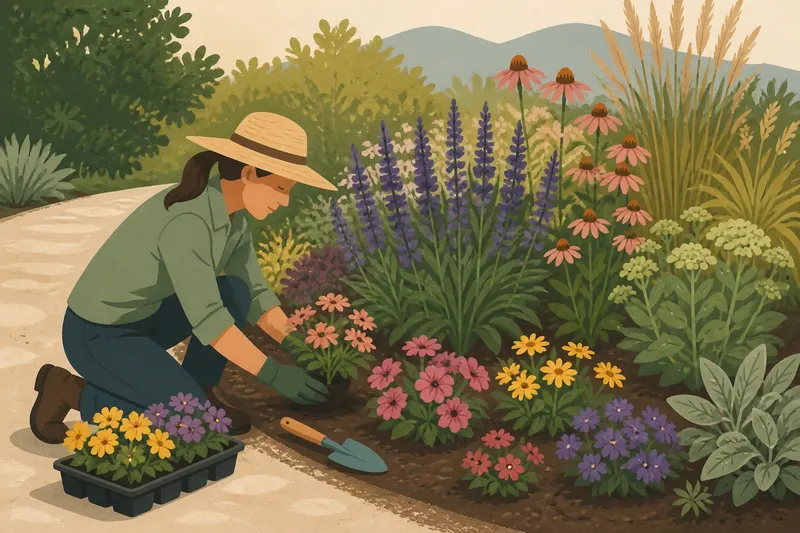
The most common mistake when choosing annuals or perennials for a changing border is asking which group is easier. That shortcut can leave you replacing plants you expected to stay, or tending a permanent planting that offers little color when you want it. Annuals or perennials for a changing border are better compared by how long they occupy a place, when they show their best, and what sort of attention their cycle asks of you.
Let each plant’s life cycle shape its role
An annual completes its life cycle in one growing season, though some plants sold as annuals may behave differently in a particular climate. Gardeners use them for a concentrated seasonal display, a temporary gap, or a color choice they want to revise. Once flowering and seed production wind down, the plant may need removal and replacement.
A perennial returns from its roots, crown, bulbs, or other persistent parts, provided its needs and local conditions suit it. That does not mean its foliage or flowers remain visible all year. Many perennials retreat, turn brown, or disappear for part of the season, then emerge again as conditions favor growth.
Think of a border as a succession of places rather than a fixed picture. A compact annual can occupy an open patch while a neighboring perennial is still developing, then be removed when the perennial fills in. A long-lived plant can anchor a section, while annuals let you adjust the front edge without digging up the anchor.
Match seasonal change to the look you want
Annuals often give a border an immediate, concentrated show. They can work beside a path, near a patio, or in a container among permanent beds, where close-up color matters and changing the display is part of the plan. Their short cycle also makes them flexible while you decide which colors or forms belong in a particular spot.
Perennials make the garden’s seasonal rhythm easier to see. One may send up fresh leaves in spring, flower in summer, and leave seed heads or stems into cooler weather. Another may be attractive chiefly for foliage. Look at the whole plant through its cycle, not only at peak bloom, before assigning it a prominent place.
In Western gardens, the same plant can behave differently in coastal, mountain, desert, or high-elevation settings. Summer heat, winter cold, and growing-season length affect whether a plant completes its cycle or returns reliably. Choose varieties suited to your local conditions, and check the plant label or supplier’s guidance for your region.
Choose the care routine that suits you
Annuals ask for attention at the beginning and end of each season: planting or sowing, checking moisture as they establish, and clearing them when they fade or become untidy. Some also benefit from removing spent flowers to keep the display looking fresh. If you enjoy making a deliberate seasonal change, that work can be part of the design.
Perennials shift more of the work toward observation and occasional editing. A crowded clump may need dividing, a leaning stem may need support, or a plant that has outgrown its place may need moving. Different perennials call for different care, so avoid treating the whole bed as one uniform group. Leave standing stems where they contribute to the border, and remove them when their condition or appearance calls for it.
Neither group is automatically low-maintenance. A thirsty annual in a hot, exposed bed may need frequent attention, while a well-matched perennial may settle into a rhythm that suits the site. The reverse can also happen: some perennials spread beyond their allotted space, and a simple annual display may be easier to refresh than to manage.
Use a mix to keep the border in motion
Give each type a clear role. Set perennials where their eventual size and recurring presence can define the composition. Use annuals in openings that need color while slower plants establish, or where you want an accent that can change with the season.
- Check whether a spot needs recurring structure; if it does, choose a suitable perennial, and if not, consider a seasonal annual.
- Check whether a short-lived color display matters more than lasting structure; if it does, plant an annual, and if not, consider a perennial with useful foliage or form.
- Check the perennial’s expected mature spread; if the available space allows for it, leave that room, and if it does not, choose a smaller plant or another location.
- Check whether annuals would crowd emerging perennial growth; if they would, plant them farther away or leave the gap open.
- Check whether a perennial disappears seasonally; if its expected habit includes dormancy, mark its location and wait for its usual return, and if not, inspect its condition before deciding what to plant there.
- Check the site’s summer exposure and local growing conditions; if a candidate suits them, use it in the border, and if not, choose a better-matched plant.
Say you have an open strip beside a path and a newly planted salvia nearby. In this invented situation, the starting point is the bare strip, the young perennial, and a plan for temporary color. You check the salvia’s expected spread and confirm that the strip lies outside it, select locally suitable annuals, and plant them without disturbing the salvia’s roots. As the salvia grows, you remove or relocate the annuals if they begin to crowd it; the resulting tradeoff is a seasonal display now in exchange for leaving the perennial room to fill its intended space.
Answer common questions about annuals and perennials
Do perennials flower every year?
Many flower once established, but bloom can vary with a plant’s maturity, growing conditions, and seasonal weather. Some perennials are grown mainly for leaves, form, or seed heads rather than an extended flowering display.
Are annuals a good choice for a new border?
They can provide color while you learn how the space feels and while slower-growing plants develop. Keep the display modest enough that it does not obscure young perennials or become a planting you feel obliged to repeat.
Can annuals and perennials grow together?
Yes, if you allow for the perennial’s eventual size and avoid disturbing its roots when planting or removing nearby annuals. Treat annuals as temporary occupants of open spaces, not permanent neighbors that must stay in exactly the same position.
What should I do if a perennial disappears?
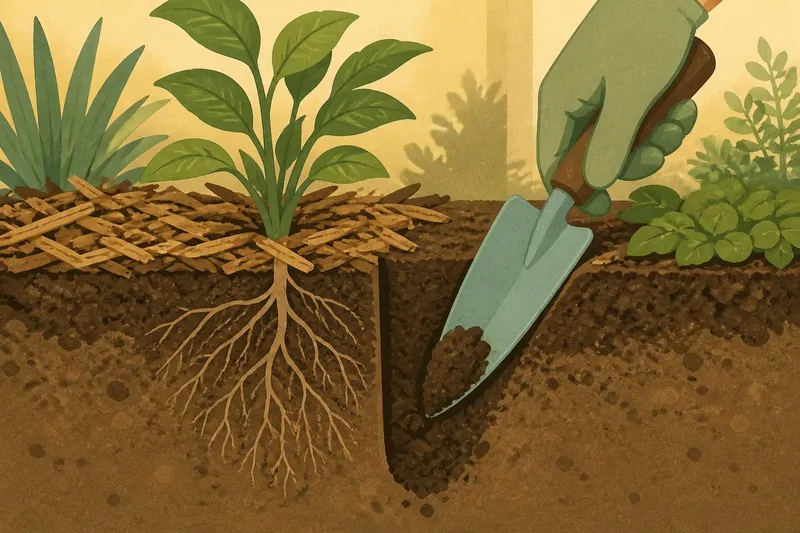
Check the plant’s expected seasonal habit before clearing the spot or planting over it. Mark its location to avoid disturbing a dormant crown or bulb, especially where neighboring plants spread across the surface.
Review the border as the seasons turn
Keep a brief note of what is visible, what has faded, and where an opening appears. A phone photo taken from the same path can help you compare the border across seasons without relying on memory. Use those observations to decide whether a gap calls for a temporary annual, a different perennial, or simply patience while an existing plant returns.
The best balance of annuals or perennials for a changing border is the one that fits your appetite for seasonal editing. Give recurring plants enough room to become part of the garden’s structure, and reserve annuals for places where a fresh choice is useful. Before filling a gap, check whether a nearby perennial is merely dormant; that pause can spare its crown and keep your next planting decision clear.