The Neat Garden Myth: Bare Soil Is Not the Only Finish
A tidy garden need not expose bare soil. Compare groundcover, mulch, and open planting to choose a finish that fits your bed and its upkeep.
The most common mistake in a tidy garden is treating every patch of visible soil as unfinished; the cost is a bed that looks stark, needs repeated attention, or crowds the plants. A neat garden can use groundcover, mulch, or deliberately open planting as different finishes, each with its own look and upkeep. The useful question is not whether soil shows, but whether the surface looks intentional and suits the plants.
Choose the finish before filling every gap
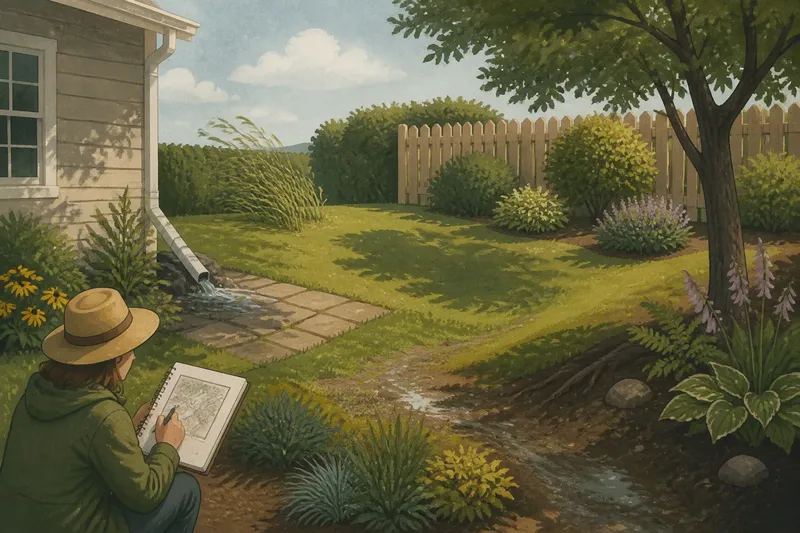
Stand at the spot where you usually see the bed: a kitchen window, path, patio, or curb. Notice the outlines you want to read clearly. A clipped edge may call for a calm, continuous surface; a loose border can accommodate more variation. Then decide which role the uncovered spaces should play.
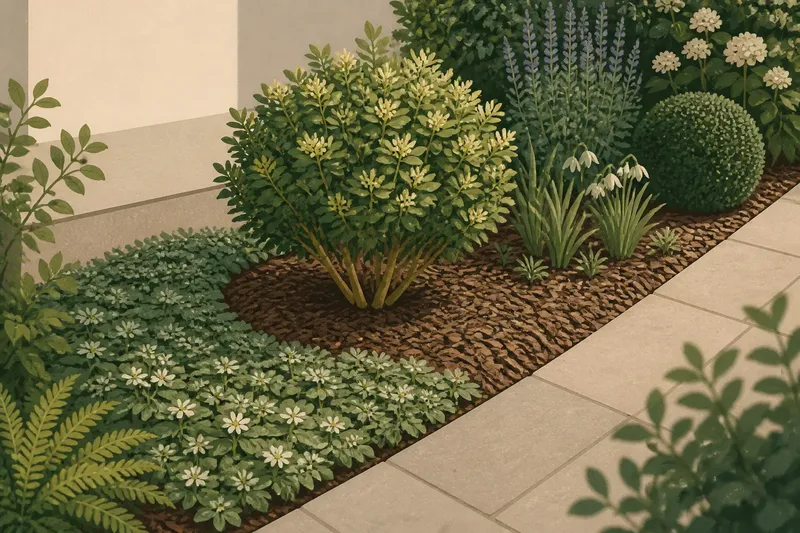
- Groundcover makes a living surface. It softens gaps and can visually link separate plants, but it needs room and may compete with neighboring roots.
- Mulch creates a uniform, nonliving surface. Bark, leaf mold, or another suitable material can give a bed a composed look while leaving space around individual plants.
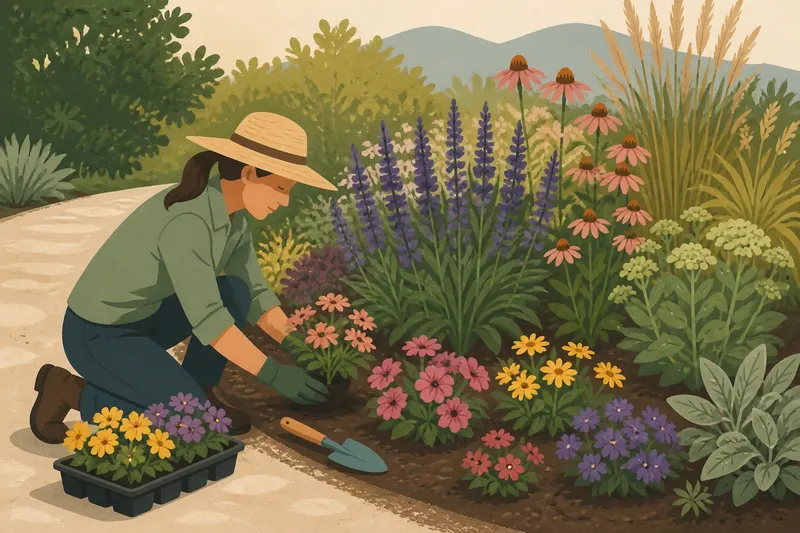
- Open planting leaves soil visible by design. It can emphasize the shape and spacing of specimen plants, as long as the exposed surface looks maintained rather than forgotten.
These choices are not grades of neatness. A groundcover-filled bed can look relaxed; a carefully raked open bed can look formal. Trouble starts when one finish is expected to behave like another—for example, when a spreading plant is treated as a static mulch or bare soil is expected to stay spotless through wind and rain.
Use a week to settle on a bed surface
Give the decision a short, practical trial before changing the whole garden. Over one week, observe the bed at different moments and make only reversible choices. You are assessing appearance, access, and the work the finish invites—not trying to prove that one material is best.
- Day one: Photograph the bed from its main viewing point. Mark the plants you want to remain visually distinct and note any paths or planting spaces that must stay accessible.
- Day two: Look at the spaces between plants. Separate narrow gaps, where a living cover may be difficult to manage, from broader areas that could support a continuous finish.
- Day three: Compare sample materials in place. Set a shallow tray of mulch beside a patch of suitable groundcover, or use a temporary border to imagine a clearly open area. View each from the path and from indoors.
- Day four: Check how the choices frame the plants. A dark surface may make pale foliage stand out; a dense green cover may visually merge with low-growing plants. Choose the effect that makes the bed’s intended shapes easiest to read.
- Day five: Consider routine care. Ask whether you want to trim runners, replenish mulch when it thins, or keep an open surface free of unwanted seedlings and debris.
- Day six: Choose one small section and prepare it for the selected finish. Remove unwanted growth and keep established plant crowns clear; do not bury stems or force a groundcover into space it cannot occupy comfortably.
- Day seven: Review the section from the original viewpoint. If the surface looks busy or the plants seem crowded, reduce the area covered or leave a deliberate opening instead of applying the same finish everywhere.
Imagine a narrow front border where a low shrub is meant to stand out against the path. You place a modest patch of a locally suitable, noninvasive groundcover beside the shrub, use mulch between it and the path, and leave a small clear ring around the shrub’s crown. The expected result is a defined focal plant, a softer transition at the edge, and no need to make the whole bed either bare or carpeted.
Match the surface to the garden’s visual job
Groundcover works best as a deliberate planting, not a last-minute filler. Choose a species suited to the site’s light, soil, and regional conditions, and check how it spreads before setting it among slower-growing plants. Leave enough room for it to mature without swallowing the forms you want to preserve. If the bed contains small spring bulbs or seedlings, consider whether a dense cover will make them hard to see or tend.
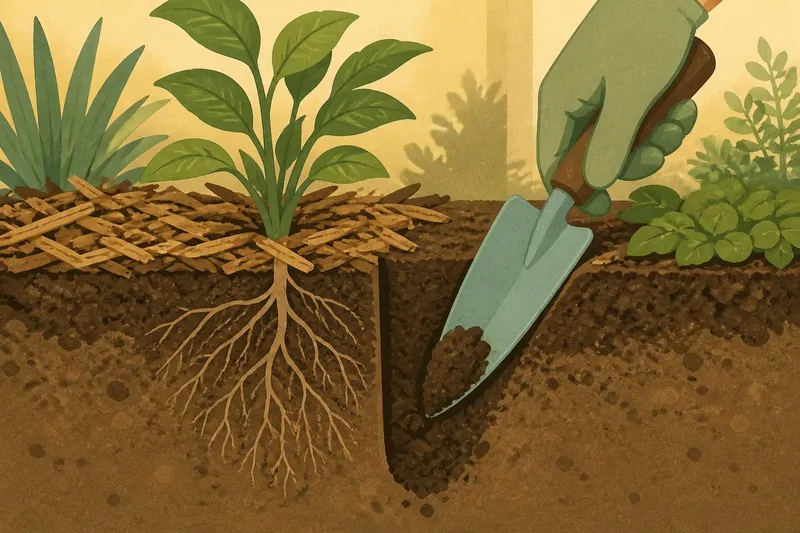
Mulch is useful when you want a simple visual field around distinct plants. Keep the layer even, but avoid piling material against trunks, crowns, or stems. The material’s color and texture affect the whole bed: shredded leaves read softly, while coarse bark creates a more pronounced pattern. Suitability and application vary by plant and material, so follow product labels, manufacturer instructions, and local guidance where they apply.
Open planting is a valid choice when the bare surface serves the composition. It can make widely spaced plants feel intentional, especially where their forms deserve room. Define the edges, remove stray debris, and accept that the soil’s appearance will shift with weather and ordinary garden activity. If that changing surface bothers you, a restrained mulch patch may be a better fit than constant tidying.
Let the seasons change the finish without changing the design
A surface that looks balanced in one season may look different as plants grow, flower, or retreat. Check the bed when its main plants are actively growing and again when they are less prominent. Groundcover may close gaps that once looked generous; mulch may become visible as foliage thins; open soil may reveal seedlings that need attention. These changes do not automatically mean the design has failed.
Make adjustments in small areas. If a groundcover starts obscuring a plant’s outline, trim it back at the boundary or replace a portion with mulch. If mulch makes a sparse bed look too uniform, reserve it for the edges and leave selected pockets open. If exposed soil looks patchy, sharpen the bed edge and remove scattered debris before deciding that it needs a full covering.
Which finish fits your bed?
Is groundcover a good substitute for mulch?
It can create a living surface, but it is not interchangeable with mulch: plants spread, need space, and may compete with nearby growth. Choose it where its mature habit suits the bed and where you are willing to maintain its edges.
Can a neat garden have bare soil?
Yes, when the open area is clearly part of the design and its boundaries are cared for. A defined planting pattern and a clean bed edge help exposed soil read as intentional rather than neglected.
Should mulch touch plant stems?
Keep mulch away from crowns, stems, and trunks instead of mounding it against them. The appropriate material and application depend on the plants and product, so use the relevant label or guidance.
How do I choose between mulch and groundcover?
Choose mulch for a consistent nonliving surface that leaves plants individually visible; choose groundcover when a living, spreading layer is part of the composition. For a bed with mixed needs, use both in separate, purposeful zones.
For a neat garden, the best finish is the one that supports the planting rather than concealing every gap. Try one small section, view it from the places you use most, and keep the boundaries clear. That simple decision can make bare soil, mulch, and groundcover all look like deliberate parts of the same garden.